
Digital signage keeps changing.
A few years ago, it was enough just to have a screen in the lobby looping different slides.
Businesses now want more details, such as interactive Maps, live data updates, and platforms that are able to connect with the tools that they already use.
If you’re wondering who’s doing it best right now, we’re going to have a look at some of the trends that are changing digital signage this year and the companies that are driving them.
Contents
- 1 Integration with Everything – 22Miles
- 2 Scale Without Stress – Scala
- 3 Signage That Talks to Staff – Appspace
- 4 Custom Experiences – Four Winds Interactive
- 5 Plug-and-Play Simplicity – NoviSign
- 6 Always-Up-to-Date Screens – Mvix
- 7 Affordable Entry Points – Yodeck and Spectrio
- 8 User-Friendly Content Tools – Enplug
- 9 Final Thoughts
Integration with Everything – 22Miles
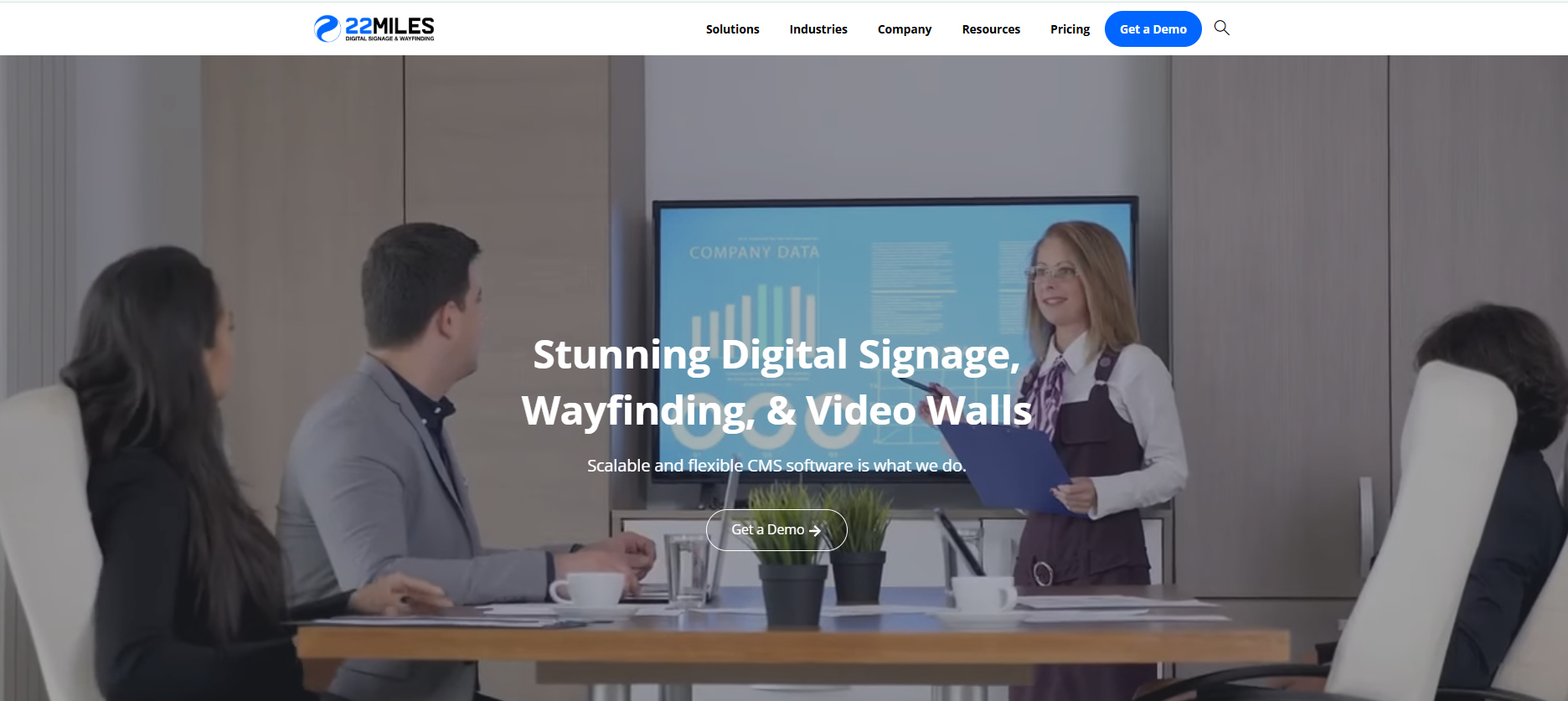
One of the biggest trends in 2025 has got to be integration screens can’t stand alone anymore, they now need to pull from things like calendars, emergency alerts, HR platforms, and more. 22Miles has leaned into this better than most.
The software is able to connect through thousands of open APIs, which basically means it plays nicely with just about any tool that you have in place. If you’re already using something like Outlook, sync to this; you need alerts to push from your safety system. Then it is perfect if you want to reuse existing screens instead of buying new hardware. That’s also possible because their platform runs on nearly all major displays.
They also continue to lead in wayfinding. 22Miles was the first to launch through 3D waving back in 2012, and today their maps are interactive, really simple to follow, and easy for organizations to update by themselves. It’s the key feature for campuses, large offices, hospitals, and more, where navigation can be difficult, and they want to make it simple.
It’s this kind of flexibility that makes 22Miles a good fit for businesses that don’t want to replace everything, just upgrade.
Scale Without Stress – Scala
Large networks continue to grow.
Airport retail chains and universities often need to have thousands of screens in many different locations. Scala continues to be the go-to for that type of scaling.
They’ve built their reputation on being able to provide stability when you’re managing content across hundreds of different sites. Downtime isn’t something that you can factor in. Scala’s platform keeps sprawling networks under control while also being able to provide businesses with Analytics so they can see what is working and what isn’t.
Signage That Talks to Staff – Appspace
Signage is not just about visitors or consumers anymore; it is now something that you will see in workplaces as a communication tool.
Appspace has carved out that niche; they link their sign into tools like Microsoft Teams and Webex so messages can be seen by employees on their screens at work and on their devices at home. You could include things like policy updates, quick surveys, or reminders, and they show up everywhere, not just in the lobby of the workplace.
Custom Experiences – Four Winds Interactive
Some organisations need a little bit more customization than using straightforward templates; they need to have a set that is completely tailored to their brand, their layout, or their audience.
That’s where Four Wins Interactive stands out.
They designed bespoke systems for hospitals, hotels, and universities. They provide them with massive video walkthroughs to interactive kiosks. Their projects tend to look and feel like more of a one-of-a-kind option. It does come at a much higher cost, but if you’re a business that is chasing a unique experience, then it could be worth it.
Plug-and-Play Simplicity – NoviSign
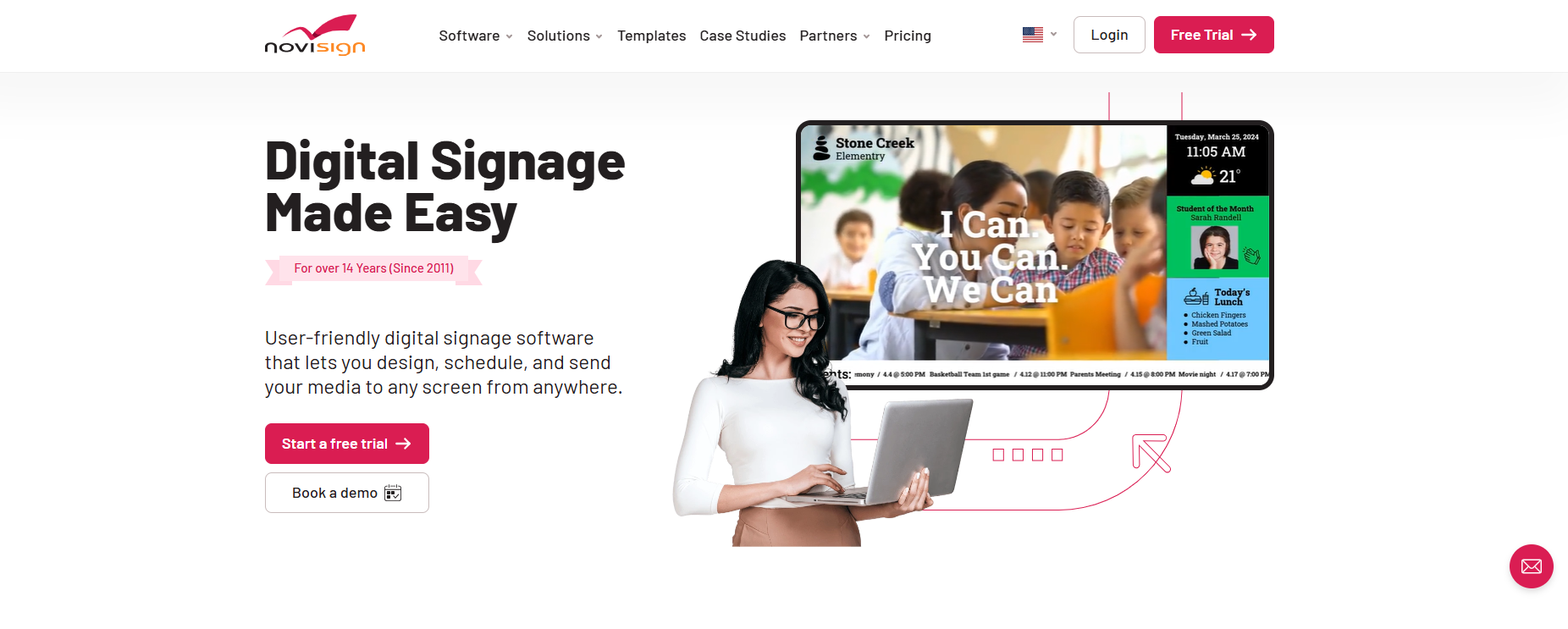
Not everybody needs to have custom builds or have a complex network; many small businesses just need something that is nice and simple.
Novisign delivers just this by providing businesses with a cloud-based platform that is really easy to manage.
They have designed a drag-and-drop publish option. It is great for people who don’t have any background in it, schools and restaurants especially like Novisign because it is affordable, and it doesn’t take weeks of training to get it right.
Always-Up-to-Date Screens – Mvix
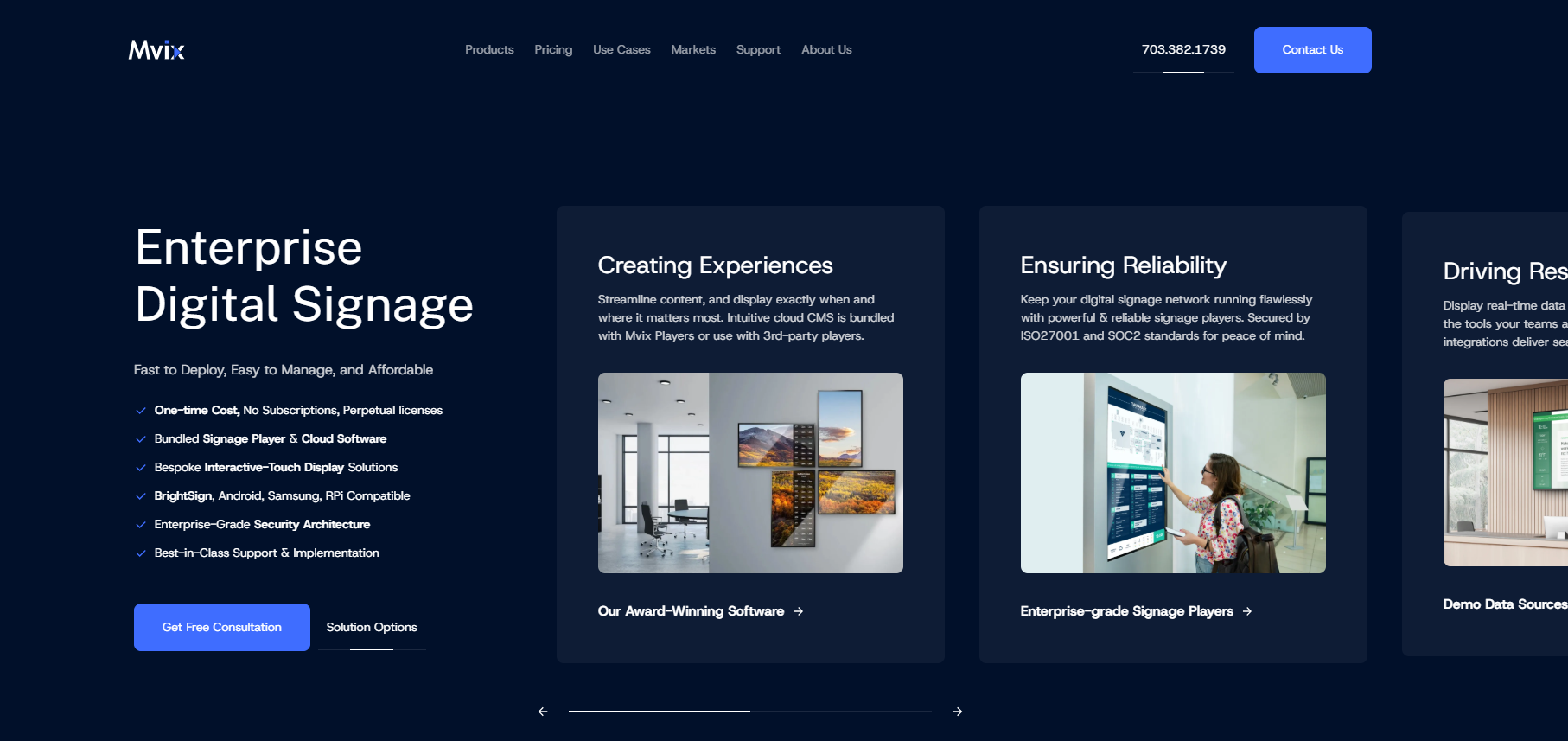
Automation is another big trend that has popped up in 2025.
Businesses don’t want to manually update news, weather, or schedules on their digital signs; they want to be able to have screens that are going to refresh by themselves. Mvix has doubled down on that feature and is something that they are proud of.
Their system connects to live feeds, so content always feels as though it is current and relevant for campus offices and transport hubs. That is something that saves a huge amount of time.
Affordable Entry Points – Yodeck and Spectrio
The last trend is affordability.
Not every business has a massive budget for things like digital signs, but they still want to be able to provide their business with something that is professional. Yodeck and Spectrio approach this in two different ways.
Yodeck focuses on a price point, offering free options to new users and keeping monthly fees as low as possible. Spectrio, however, links signage into marketing, so they offer content creation services as well as signage services. Both of them lower the barrier for smaller businesses, which want to start out using this type of service without overspending.
User-Friendly Content Tools – Enplug
Content is what makes or breaks digital signage.
Enplug, which is also part of Spectrio, built its reputation on being one of the easiest tools for content management. They provide you with apps for social media feeds, live dashboards, and Company news, which means that it is really easy to keep your screens fresh and up-to-date. Even teams without designers are able to create attractive, engaging displays in just a few minutes.
Final Thoughts
Digital signage is more than just basic screens; now it’s all about integration, scale, ability, automation, and being able to personalize everything that is displayed.
For businesses that want their signage to connect with some of the tools that they already use and use new features like wayfinding, 22Miles, the pack focuses on flexibility and integration, making them a strong partner for a business’s future.
At the same time, there are other providers that are worth considering, depending on what your goals are. Some Focus more on affordability, while others focus on things like custom builds and content Creations. What matters most is that you choose a system that is perfect for your needs today, but isn’t going to hold you back when you come to growing in the future.